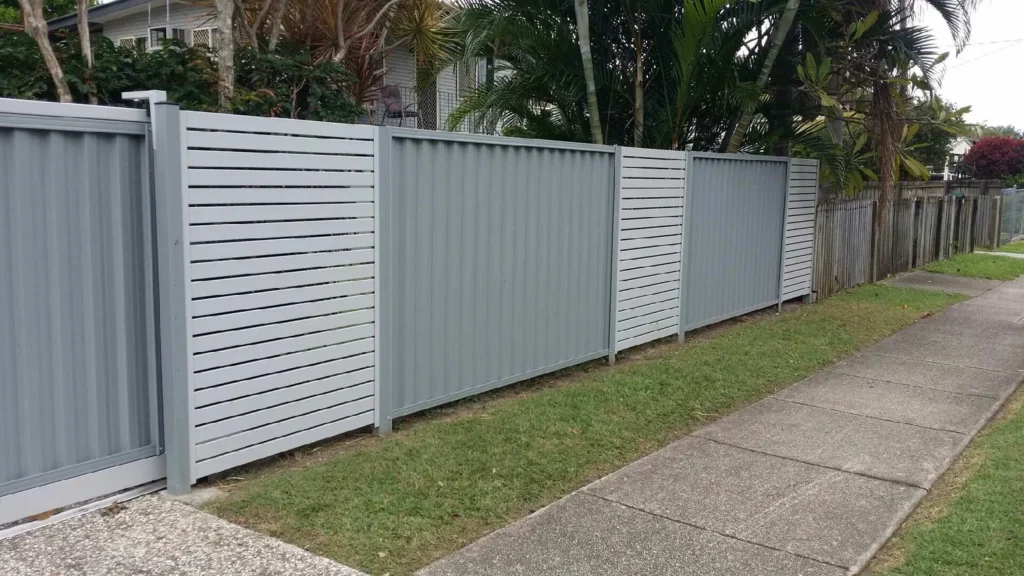
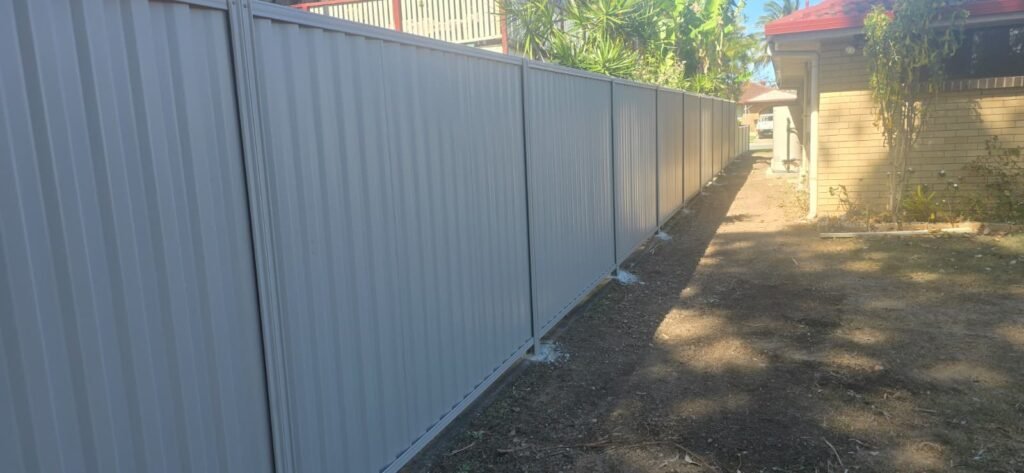
Quick answer: In Queensland, neighbours generally split the cost of a sufficient dividing fence equally. Before any work starts, the neighbour who wants the fence built or replaced gives a written notice that includes an estimated cost and a written quotation. If you cannot agree within a month, either of you can ask QCAT to decide. If you want a fence that is better than the standard, you pay the extra.
This is the rule under the Neighbourhood Disputes (Dividing Fences and Trees) Act 2011. We are a fencing supplier, not a law firm, so treat this page as a plain-English guide and check the Act itself for your own situation. We wrote it because the same questions come up at our Deception Bay counter all the time: who pays, who has to be told, and what happens if the neighbour says no.
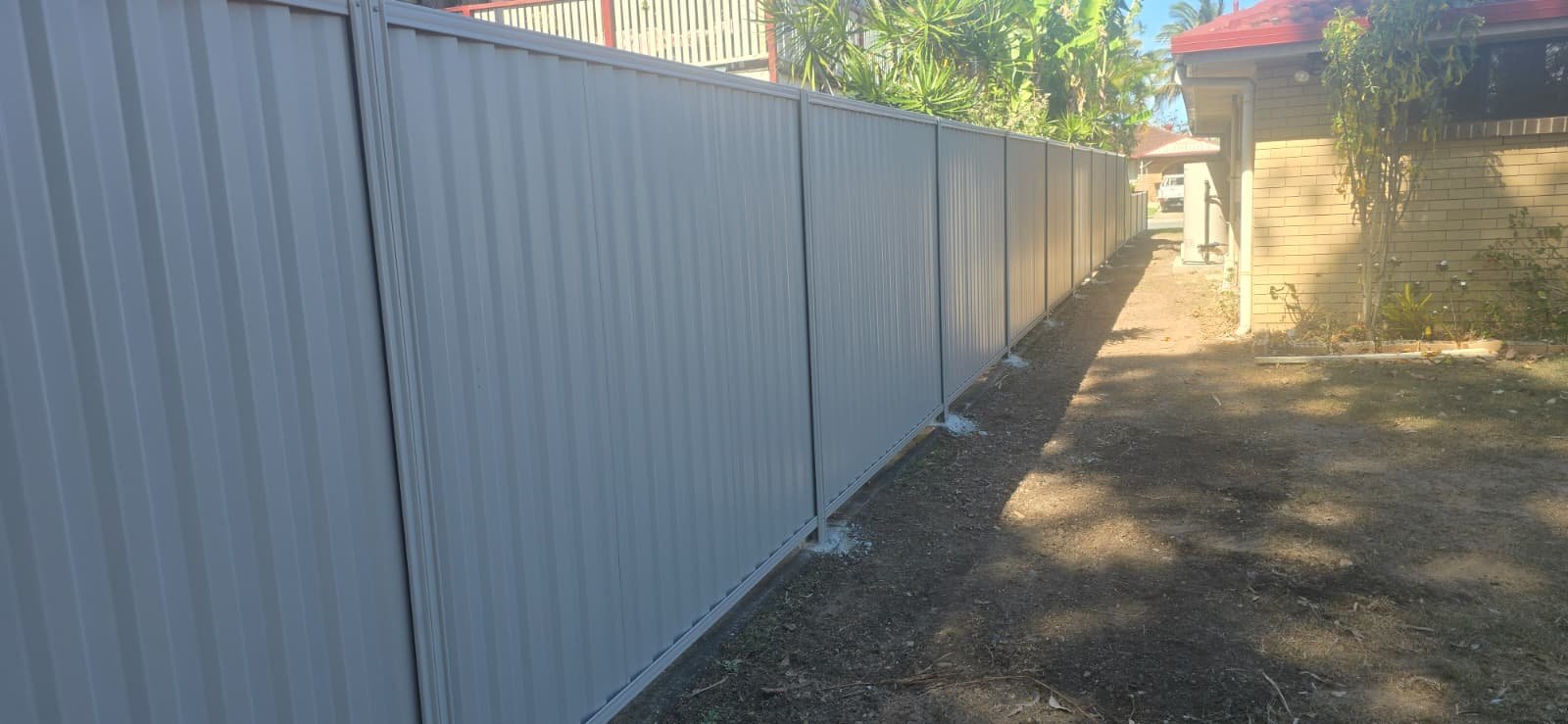
Who Pays for a Boundary Fence in Queensland?
Section 21 of the Act says adjoining owners are each liable to contribute equally to fencing work for a sufficient dividing fence. In practice that means:
- Half each for building a new sufficient fence, or replacing one that has reached the end of its life.
- Half each for repairs needed to keep a sufficient fence standing.
- Extras are yours. If you want a taller fence, a more expensive material or a feature the standard does not need, you pay the difference. Your neighbour only contributes to the cost of a sufficient fence.
The fence is also owned jointly. Neither neighbour can simply remove it or decide on their own what replaces it.
What Counts as a Sufficient Dividing Fence?
For two residential blocks, a sufficient fence is one that is:
- Between 0.5 m and 1.8 m high, and
- Made substantially of a prescribed material. The Act lists these as timber (including palings and lattice), chain wire, metal panels or rods, bricks, rendered cement, concrete blocks, a hedge or other vegetative barrier, or another material a dividing fence is ordinarily made from.
Metal panels are on the list, so steel and aluminium panel fencing both fit. Local laws can add their own requirements, so it is worth a quick check with your council before you settle on a design. Neighbours can also agree between themselves that a different fence is sufficient.
How the Notice Works
You cannot send a neighbour a bill after the fact. The Act sets out a process, and it protects both sides.
- Talk first. Most fences are sorted with a conversation over the fence. If you agree on the work and the split, you are done, and it helps to put it in writing.
- If you want it formal, give a notice to contribute. It must be in the approved form. It describes the land, the type of fencing work and the estimated cost including labour and materials, and it must come with a copy of at least one written quotation.
- Wait for an answer. Neither of you may carry out the fencing work, or arrange for it, until you have agreed on the work and the contributions. The exception is urgent work, such as a fence that has come down in a storm.
- If there is no agreement within one month, either neighbour can apply to QCAT (the Queensland Civil and Administrative Tribunal) within two months after the notice was given, and QCAT can make an order.
The practical point is the quotation. A notice needs real numbers, so get a written quote for the whole job before you approach your neighbour. A clear quote also tends to make the conversation easier, because nobody is arguing over guesses.
What Is Not Shared
Retaining walls. A retaining wall is usually of more benefit to one neighbour, so it is not normally a joint cost. If your fence sits on a slope and needs a wall or plinth to hold the ground, ask who actually benefits before assuming a 50/50 split. Our guide to fencing sloped blocks covers the options.
Pool fences. A boundary fence that also serves as a pool barrier has to meet the pool safety standard, and the pool owner is responsible for the extra cost of that. Pool barriers are a separate topic with their own rules. Start with our pool fencing guide.
Height and approval. Fences up to 2 m high that belong with an existing house generally do not need building approval, provided they are not part of a retaining wall, are not associated with a pool and do not restrict water run-off to the neighbours. If you are going taller, or the block is unusual, check with your council first.
Choosing a Fence Both Sides Are Happy With
Most disputes are about the look, not the law. A few things make agreement easier:
- Pick a colour that suits both yards. A neutral GramLine® colour such as Birch sits well beside most houses. Our GramLine® vs Colorbond® guide explains the range.
- Agree the height early. The Act's 1.8 m ceiling is the sufficient height. If one side wants privacy above that, the extra is theirs to fund and approve.
- Get one quote on paper. Both of you can then see exactly what is being split, and the notice already has the quotation it needs.
Getting the Fence Materials Sorted
We manufacture and supply GramLine® steel fencing, Colorbond® steel fencing and aluminium fencing from our Deception Bay warehouse, in kit form made up to your measurements. Send us the length of the boundary, the height you have agreed and the colour through our quote form, and we will price the materials. One thing to know about how we work: we supply, we do not install. If you need someone to fit it, we can point you to local installers who work with our products regularly, and their quote is the other half of the written quotation your notice needs.
Frequently Asked Questions
Do I have to pay half of my neighbour's new fence?
If it is a sufficient dividing fence and the right process has been followed, yes, neighbours are each liable to contribute equally. If your neighbour wants something more than sufficient, such as a taller or more expensive fence, they pay the extra.
Can my neighbour build a fence without telling me?
Not if they expect you to contribute. Neither owner may carry out or arrange fencing work until you have agreed on the work and the contributions, except for urgent work. A written notice with a quotation is the proper way to start.
What if my neighbour will not agree or does not reply?
If you have not agreed within one month of the notice being given, either of you can apply to QCAT within two months of the notice for an order.
How high can a boundary fence be?
A sufficient fence between two residential blocks is between 0.5 m and 1.8 m. Fences up to 2 m associated with an existing house generally need no building approval, but check with your council, especially for retaining walls, pool areas or anything that affects water run-off.
Is a steel or aluminium fence allowed as a dividing fence?
Yes. The Act lists metal panels or rods as a prescribed material. Your council's local laws may add requirements, so confirm before you order.
Do you install the fence?
No. We manufacture and supply the materials. We can refer you to local installers who work with our products regularly.
Planning a boundary fence? Send us the length, the agreed height and the colour through our quote form and we will price the materials.